

Welcome to Retro Glitch, a retrospective of the gaming industry’s
most shining moments prior to the advent of DLC, micro transactions and online
multiplayer. In this entry we’ll be taking an in depths look at the process and
circumstances that led to Konami’s masterpiece Castlevania: Symphony of the Night; as well as its narrative,
themes, characters and aftermath.
Three songs for a
dollar

For those uninitiated the Castlevania series is a flagship franchise
of Konami Corporation; a company founded on March 19th 1973 by Kagemasa
Kozuki. The company began its corporate climb as a jukebox repairs and rental
service, before long they began manufacturing arcade cabinets, and have since
expanded their expertise in to trading cards, television, film, gambling machines
and even health and sports clubs across Japan. No doubt that in the company’s forty
years they have achieved a lot; going from repairing jukeboxes to becoming the fifth
largest video game developer in the world.

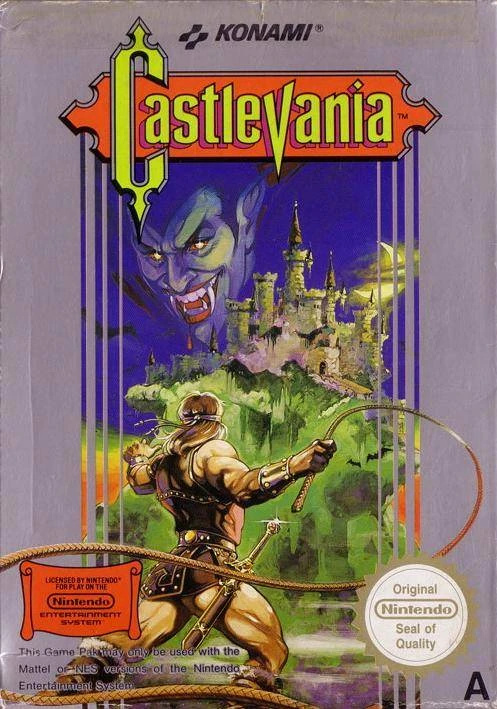

The Castlevania series began with an entry simply titled Castelvania on September 26th
1986 for the Family Computer Disk System or FCDS; naturally the game debuted in
Japan. The game wouldn’t hit western audiences until 1987, when it was ported
and localised for the Nintendo Entertainment System. Castlevania was inspired by Bram
Stoker’s Dracula with Konami’s
own twist on the narrative; the player would take on the role of Simon Belmont
a vampire hunter setting forth to vanquish Dracula. The concept was simple and
would be repeated throughout the series history, the only equation changing in
the formula would be the character. Each entry followed a different member of
the Belmont family; a clan destined to defeat the count, the only constant in
the series would be Dracula himself and his right hand man Death.
The game was a success
with its emphasis on action and platforming; but in a way that stressed strategy.
The game had become the template and bar for 2-D action adventure games. Konami
wasted no time in spawning a franchise from it; the next games would come to
offer more of the familiar breed of gameplay, not all were revered, some even
considered black sheep. Nevertheless they were all strong enough to keep the
series alive. But it would be almost a whole decade before the series really reached
its magnum opus.
Orchestrating a
classic
During the mid to late nineties the video game industry was
entering its fifth generation; and the transition was a steady one, easing away
from the two dimensional realm of the SNES to the Three dimensional polygons of
the PlayStation and Nintendo 64. Although that didn’t mean the standards of the
games remained intact; where series such as Zelda and Mario proved to do even
better on the new consoles; games such as Sonic the Hedgehog were struggling to
find their ground. The series wanted to find its place and decided to invest in
a new 3-D title; the title was to essentially be a revamp for the whole
franchise. The game was purely titled Castlevania
and with it would come new visuals, new mechanics and what Konami was hoping for; new
players. The company set a development team to work on it, and in the time
between its production and release they opted to put out a conventional 2-d
Castlevania.
The game was known as Castlevania:
Symphony of the Night to western audiences, and Demon Castle Dracula X: Nocturne in the Moonlight to Japan. Both names were ominous and conveyed the
sense of melodic enchantment that came from trawling through Dracula’s castle. Nothing
spectacular was expected from the game; although Konami certainly weren't phoning
it in. It wasn't nearly as great a gamble as what the Nintendo 64 games were,
it was simply meant to appease the fans, which it did; but more importantly than
that it generated the golden template that the others would follow. This ends our first installment of Retro
Glitch, but soon enough we will return with a further inspection of how this
sleepy underdog came to be a gaming great.
Written by Silas Grayson

No comments:
Post a Comment